Buy Eyeglasses at Lensalter- up to 50% OFF! SHOP NOW



What Strength Reading Glasses Do I Need? A Complete Guide
If you’ve started to squint at your phone, struggle to read menus in dim light, or stretch your arm just to bring text into focus, you’re not alone. These are some of the first signs that you might need reading glasses. As we age—usually around our 40s—our eyes naturally lose their ability to focus on nearby objects, a condition known as presbyopia.
But choosing the right pair isn’t as simple as grabbing the first one you find at the store. You’ll see numbers like +1.00, +1.50, or +2.75 printed on the labels, and those indicate different reading glasses strengths—each designed to help with varying levels of near-vision difficulty. Picking the wrong one can lead to eye strain, headaches, or blurry vision, while the right one can restore clarity and comfort.
In this complete guide, we’ll break down everything you need to know:
- how reading glasses strength works,
- how to find your ideal diopter level,
- common symptoms that show it’s time to wear reading glasses,
- and expert-approved tips for choosing stylish men’s frames that match your face and lifestyle.
Whether you’re shopping online or trying frames in-store, understanding your reading glasses power is key to improving vision without compromising your look. Let’s dive into how to select the perfect strength and style—so you can read clearly, confidently, and comfortably again.
Why You Might Need Reading Glasses
It usually starts subtly—you notice yourself squinting at your phone, holding books farther away, or realizing that reading small print under dim lighting feels like a chore. If that sounds familiar, it’s a clear sign that your eyes are beginning to lose their near-focus flexibility. The medical term for this is presbyopia, and it’s one of the most common reasons people start wearing reading glasses.

1. The Natural Aging Process
As we age, the lens inside the eye gradually becomes less flexible. This makes it harder to focus on close-up objects, like text on a screen or fine print on a label. Most people start to experience this around their early 40s, though it can happen sooner depending on lifestyle and genetics. It’s a completely natural change—not a disease—and reading glasses strength helps correct it by adding just the right amount of magnification for near vision.
2. Digital Eye Strain and Screen Fatigue
Even if you’re not “getting older” yet, spending long hours looking at computers or smartphones can lead to digital eye strain. Symptoms like dry eyes, blurry vision, and headaches after prolonged screen time are becoming more common among younger adults too. Using low-power reading glasses (like +1.00 or +1.25) can sometimes ease that strain, especially when combined with blue-light blocking lenses.
3. Lighting Conditions and Work Habits
Poor lighting can make even healthy eyes work overtime. If you frequently read in dim environments, your pupils widen to capture more light, which also reduces focus accuracy. A mild reading glasses power helps your eyes relax so you can read comfortably even when lighting isn’t ideal.
4. Headaches and Eye Fatigue
One overlooked sign that you might need reading glasses is frequent tension headaches—particularly after reading, crafting, or using your phone for extended periods. This happens because your eyes are straining to compensate for near-vision blur. With the correct reading glasses strength, your eyes no longer need to overwork, resulting in immediate relief and better focus.
5. Normal Vision Doesn’t Last Forever
Even if you’ve always had perfect eyesight, that doesn’t make you immune to presbyopia. You might pass an eye chart test perfectly at 20 feet, but that doesn’t mean you can still focus well at 12 inches. That’s why what strength reading glasses do I need has become one of the most searched questions for adults past their 40s. It’s not about losing your vision—it’s about adapting to your eyes’ natural evolution.
The Basics of Reading Glasses Strength
When you first walk into a store or browse online and see numbers like +1.00, +1.50, or +2.75 printed on reading glasses, it’s easy to wonder what they mean. These numbers represent reading glasses strength, also known as diopters, which measure how much magnification a lens provides. The higher the number, the stronger the magnifying power — and the more help your eyes get when focusing on close-up tasks.

Understanding Diopters (The “+” Numbers)
Each reading glasses power is expressed in diopters, starting around +1.00 and typically increasing in increments of +0.25 or +0.50.
- A +1.00 strength offers mild magnification, perfect for early signs of presbyopia or occasional reading.
- +2.00 or +2.25 indicates moderate assistance for people who read or use screens frequently.
- +3.00 or above provides strong magnification for those with significant near-vision loss, usually after age 60.
These numbers aren’t random—they’re based on how much correction your eyes need to bring near objects into clear focus.
Why the “+” Symbol Matters
The plus sign in +1.50 reading glasses means the lenses are designed for near vision. In contrast, lenses for distance vision use a minus (–) sign. So, when you’re choosing readers, make sure the lenses are marked with “+” followed by your desired strength.
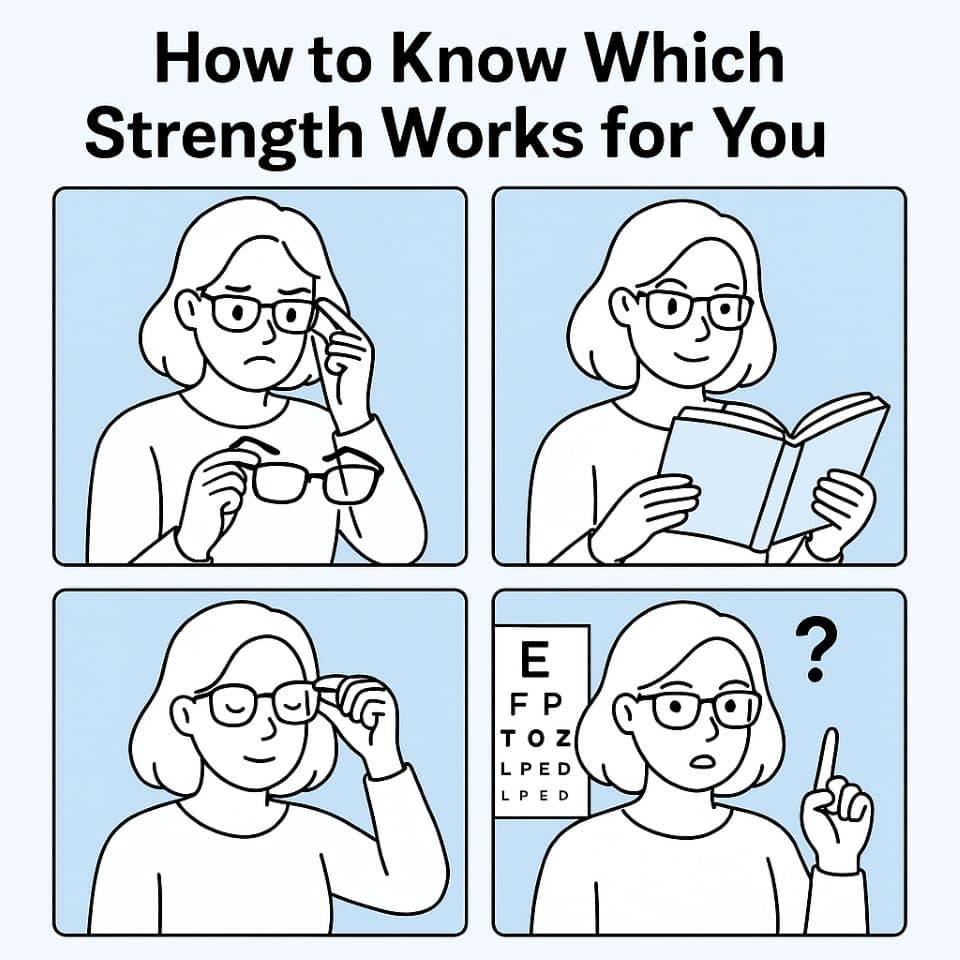
How to Know Which Strength Works for You
Finding the right reading glasses strength isn’t about guessing or luck—it’s about understanding how your eyes behave in real-life situations. Choosing the proper reading glasses power ensures that your vision stays sharp, comfortable, and strain-free, no matter what you’re reading or how long you spend on screens. Here are the most effective and practical methods to determine your ideal diopter strength.
1. Use a Diopter Reading Chart
One of the simplest ways to identify your reading glasses power is by using a diopter test chart. You can easily find printable versions online. Hold the chart about 14 inches (35 cm) from your eyes, which is the standard reading distance for most people.
- Start reading from the top line and move downward until the letters become blurry.
- The smallest line you can read clearly indicates the reading glasses strength that fits your vision.
- If you can’t see even the largest lines, it’s time for a professional eye exam to rule out other vision issues.
This quick test gives you a reliable baseline before purchasing a pair of readers, especially if you’re shopping online and can’t try them in person.
2. Try On Different Strengths in Store
If you prefer testing in real life, visit a local optical shop or pharmacy that carries several reading glasses strengths (usually ranging from +1.00 to +3.50).
- Start with a lower power, like +1.00. Try reading a small-print label or magazine.
- If the text still looks fuzzy, move up gradually in +0.25 or +0.50 increments.
- The best pair should allow you to read comfortably without leaning forward or holding materials at an odd distance.
Remember, stronger isn’t always better. The right reading glasses power is the one that feels natural—sharp focus, no eye strain, and no dizziness.
3. Pay Attention to Your Reading Distance
Everyone has unique reading habits. Some people hold books closer, while others prefer more distance. That’s why the same reading glasses strength doesn’t work for everyone of the same age.
- If you usually read closer than 12 inches, you may need a slightly higher power.
- If you prefer holding materials farther away (like tablets or menus), a lower strength might suffice.
Understanding your natural reading distance can help you fine-tune your diopter choice.
4. Use an Online Strength Finder Tool
Many eyewear websites now offer interactive reading glasses strength tests. These simulate real reading conditions through on-screen text that adjusts size and clarity. While they can’t replace an in-person eye exam, they’re a convenient first step if you want to order online. Just make sure you take the test under proper lighting and with your usual reading distance.
5. When to See an Eye Doctor
If you’ve tried several reading glasses strengths and still struggle to focus, experience double vision, or get headaches, it’s best to schedule a professional eye exam. You may have other vision needs—like astigmatism or different prescriptions for each eye—that over-the-counter readers can’t fix.
Reading Strength Guide (Approximate)
If you’re still unsure about what reading glasses strength to choose, this quick guide can help. While everyone’s eyes are unique, most people follow a general pattern as they age. The reading glasses power you need typically depends on how much your near vision has declined — and how often you perform close-up tasks like reading, sewing, or working on a laptop.
Below is a simple age-based guide that offers an approximate reference point to find your ideal reading glasses strength.
| Age Range | Recommended Strength (Diopters) | Typical Use Case | Pro Tip |
|---|---|---|---|
| 35–45 years | +1.00 to +1.25 | Early presbyopia, mild difficulty focusing on fine print | Start with the lowest power that lets you read clearly without squinting. |
| 45–50 years | +1.50 to +1.75 | Noticeable strain reading books, menus, or phone screens | Keep a pair in your bag or at your desk for quick reading. |
| 50–55 years | +2.00 to +2.25 | Regular readers or heavy screen users | Consider blue-light blocking reading glasses to reduce digital fatigue. |
| 55–60 years | +2.50 to +2.75 | Stronger magnification needed for small text | Choose anti-glare lenses if you work under bright lighting. |
| 60+ years | +3.00 to +3.50 | Advanced presbyopia and frequent near work | Schedule yearly eye exams to reassess your reading glasses power. |
Understanding This Table
This chart provides general guidance, not a medical prescription. Some people may need slightly higher or lower reading glasses strength depending on their reading distance and eye health. For example, if you prefer holding a book close to your face, you might benefit from a slightly stronger power. On the other hand, if you read at arm’s length, a weaker diopter could feel more natural.
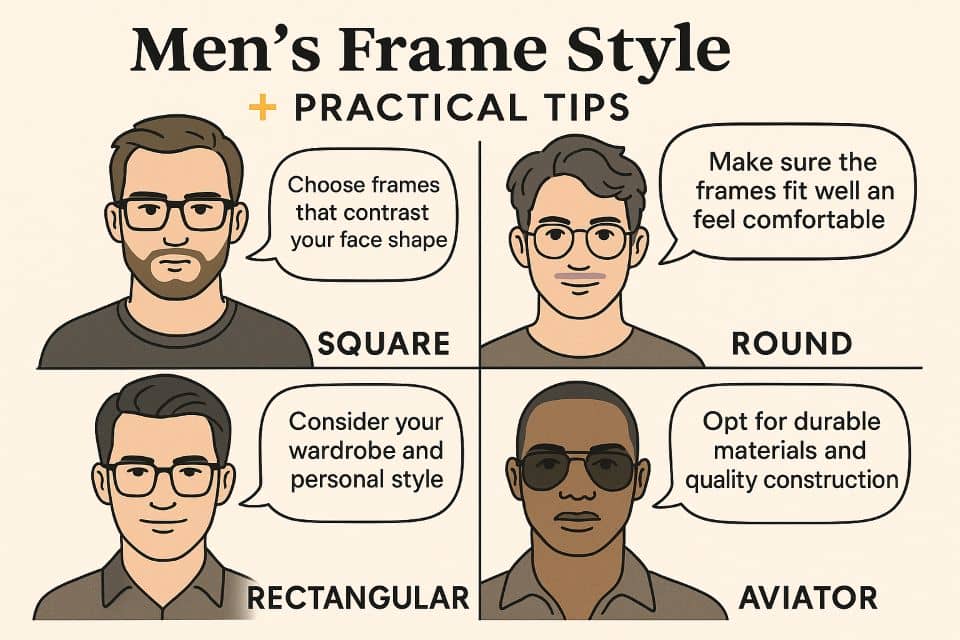
Men’s Frame Style + Practical Tips
Finding the right reading glasses strength is only half the journey — the other half is picking a pair of men’s reading glasses that not only fit your vision needs but also complement your face shape, lifestyle, and personal style. The right frames can transform reading glasses from a necessity into a subtle style statement.
Let’s explore how to combine functionality and fashion when choosing reading glasses for men, along with a few practical tips that make daily use more comfortable.
1. Choose Classic Colors That Never Go Out of Style
When it comes to men’s eyewear, timeless shades like black, gunmetal, or dark tortoise always look refined. A pair of black reading glasses works well for both office and casual wear, offering a sleek, confident look that suits almost any outfit.
If you want a modern twist, try matte finishes or transparent acetate frames—they’re trending in 2025 yet still maintain a clean, professional vibe.
2. Pick a Frame Shape That Matches Your Face
Your reading glasses power won’t matter much if your frames don’t fit your face. The goal is balance — choosing a shape that enhances your natural features.
- Round faces: opt for rectangular or square frames to add structure and definition.
- Square faces: go for round or oval frames to soften strong angles.
- Oval faces: you’re lucky — almost any style looks good, especially classic wayfarer-style frames.
- Heart-shaped faces: try semi-rimless or bottom-light frames to balance a broader forehead.
By matching your frame shape to your facial structure, your men’s reading glasses will look intentional, not just functional.
3. Comfort and Fit Matter More Than You Think
Even if you find the perfect reading glasses strength, an uncomfortable frame can ruin the experience. Look for:
- Adjustable nose pads for a snug fit without slipping.
- Flexible hinges to handle daily wear and tear.
- Lightweight materials such as titanium or acetate that feel comfortable for long reading sessions.
When reading or using digital devices, comfort directly affects focus. A poorly fitting pair can cause pressure marks, fatigue, and even headaches—symptoms often mistaken for needing a stronger lens.
4. Add Functional Features That Protect Your Eyes
Modern men’s reading glasses aren’t just about magnification; they can include advanced coatings that enhance your reading experience:
- Blue light filtering lenses reduce digital eye strain from screens.
- Anti-glare coating helps when reading under artificial light.
- Scratch-resistant layers make your glasses last longer and stay clearer.
If you’re someone who works on a laptop all day, combining your ideal reading glasses strength with a blue light blocking filter can dramatically improve comfort and eye health.
5. Keep Multiple Pairs Handy
Many men benefit from owning more than one pair of readers. You might use +1.25 glasses for screen work and +2.00 for detailed reading. Keep one pair at your desk, one in your car, and one by the bed. That way, you’re never caught squinting for your next meeting or late-night novel session.
If your style leans toward fashion, you can even match different reading glasses styles to your wardrobe — for example, a bold rectangular frame for work and a minimal round frame for weekends.
6. Think Long-Term: Eye Health and Upgrades
As your presbyopia progresses, you may need slightly stronger lenses every few years. Schedule a simple eye checkup annually to ensure your reading glasses power still fits your needs. Upgrading your lenses doesn’t mean sacrificing your favorite frames — many optical shops can replace lenses within the same frame design.
Final Thoughts:
Choosing the right reading glasses strength isn’t just about clearer vision—it’s about comfort, confidence, and living life without unnecessary strain. Whether you’re reading a newspaper, scrolling through your phone, or tackling long work documents, the correct reading glasses power makes every task easier and more enjoyable.
Many people make the mistake of thinking any pair of readers will do. But when you take the time to understand what strength reading glasses you need, you’ll notice the difference immediately: sharper text, relaxed eyes, and no more headaches after a long day. It’s a small change that can have a big impact on your productivity and overall comfort.
As your vision evolves, remember that your eyes deserve regular checkups. Your reading glasses strength may need an update every few years—and that’s perfectly normal. Think of it as an opportunity to refresh both your vision and your style. Today’s men’s reading glasses come in endless designs—from timeless black frames to lightweight, modern styles that feel just as good as they look.
If you spend hours in front of screens, consider blue light blocking reading glasses to reduce fatigue and protect your eyes from digital glare. For multitaskers who read, drive, and work, having more than one pair with different reading glasses strengths can make a noticeable difference in your daily routine.
Ultimately, wearing reading glasses shouldn’t feel like an admission of age—it’s a sign of self-care. You’re choosing to see the world clearly, stay focused, and look good doing it. So, whether you prefer bold, modern frames or understated classics, the perfect pair is out there waiting to help you rediscover the joy of effortless reading.
And if you’re ready to take that step, explore high-quality men’s reading glasses at Lensalter.com — where precision meets style. From sleek black frames to fashion-forward acetate readers, you’ll find a pair that matches your exact reading glasses power and personality.
Frequently Asked Questions(FAQS)
Extended Reading:
