Buy Eyeglasses at Lensalter- up to 50% OFF! SHOP NOW


How to Properly Clean Your Glasses Without Damaging Them
Over time, glasses collect a surprising amount of debris—fingerprints, facial oil, dust, makeup, and air pollution—all of which can cloud your lenses and irritate your eyes. Worse, using the wrong cloth or cleaner might scratch the lenses or strip away protective coatings. In this complete guide, we’ll break down the safe, step-by-step process for cleaning your glasses, give you tips for maintaining them daily, and show you how to avoid common mistakes that lead to long-term damage.
If you’ve ever wondered what’s the best way to clean your eyeglasses without ruining them, or how to extend the life of your lenses, you’re in the right place. Let’s make sure your glasses stay as clear and comfortable as the day you got them.
Why Proper Glasses Cleaning Matters
Your glasses deal with a lot more than you think. Dust, facial oils, makeup, fingerprints, and even air pollution land on your lenses every single day. If left unchecked, these particles can not only cloud your vision but also cause tiny scratches that add up over time.
Worse? Cleaning your lenses the wrong way—like using your shirt or paper towel—can actually grind that dirt in deeper. Proper care doesn’t just mean clearer vision today—it means preserving the life of your eyewear for the long haul.
Pre-Cleaning Prep: What to Do Before Touching Your Lenses
Wash Your Hands First
Sounds obvious, but skipping this step is one of the most common mistakes. Dirty fingers = dirty glasses. Use warm water and mild soap, scrub for at least 20 seconds, and dry with a clean towel. This prevents oil or grit from transferring onto your lenses while you clean them.
Set Up a Clean Space
Always clean your glasses over a soft, flat surface. A lint-free towel on a table is perfect. Avoid doing it over a bathroom sink or cluttered counter, where a slip could scratch or even break your glasses.
Check for Debris
Before wiping anything, inspect your lenses under light. If you see sand, grit, or tiny particles, rinse first—never rub dry, or you could scratch the coating.
What You Should Use (and Avoid) When Cleaning Glasses
Use a Quality Microfiber Cloth
A microfiber cloth for glasses is your best friend. Unlike tissues or shirts, microfiber lifts away dust and oil without scratching. Keep one in your bag, your desk, and your car.
Go for a Lens-Safe Cleaner
Choose a lens-safe spray or mild dish soap diluted with water. Never use household cleaners, glass sprays, or alcohol-based solutions—they can break down anti-reflective and UV coatings.
💡 Tip: If you’re cleaning AR-coated lenses or tinted sunglasses, always check the cleaner is safe for coatings.
Avoid These Mistakes:
- No paper towels or facial tissues
- No saliva (yes, some people do this)
- No ammonia-based cleaners
Step-by-Step: The Best Way to Clean Eyeglasses Without Scratching Them
Cleaning your glasses might seem straightforward, but doing it wrong can lead to scratches, smudges, or even damaged lens coatings. If you’ve ever cleaned your lenses and ended up with more streaks than before, this simple step-by-step eyeglass cleaning method is for you.
Start by holding your glasses under a gentle stream of lukewarm water. This helps wash away any loose dust or dirt before you even touch the lenses. Never use hot water—some coatings can warp or peel with heat exposure. Cold water works too, but it may not dissolve oils as effectively as warm water.
Next, add a small drop of mild, lotion-free dish soap to your fingertips. You don’t need much—a little goes a long way. Gently rub the soap across both sides of the lenses and along the frame. Don’t forget the nose pads and the edges where the lenses meet the frames, as these areas collect oil and grime over time.
Once the glasses are fully lathered, rinse them thoroughly under running water to remove all soap. Be sure not to leave any residue behind—it can leave cloudy streaks if not washed off properly.
Now it’s time to dry them. Take a clean microfiber cloth, not your shirt or a paper towel. Start at the center of each lens and move outward in a gentle circular motion. Avoid pressing too hard; it’s about lifting residue, not scrubbing it away. Let any hard-to-reach spots, like hinges, air dry if needed.
If you’re still seeing smudges or streaks after drying, resist the urge to rub harder. Instead, add a little bit of eyeglass-safe cleaner and repeat the drying process. Sometimes oils need a second pass, but forceful wiping will only lead to damage.
This whole process takes less than two minutes but makes a world of difference. Not only will your vision be crystal clear, but you’ll also keep your lenses in great shape for the long run. It’s the safest, simplest way to clean your glasses without scratching or stripping the coating.
Simple Daily Habits to Keep Your Glasses in Great Shape
Taking good care of your glasses doesn’t end after a proper cleaning. If you want your lenses to stay crystal clear and your frames to stay aligned, it’s all about daily maintenance habits that are easy to build into your routine. Small actions make a big difference in preventing damage over time.
First things first—how you store your glasses matters. Whenever you’re not wearing them, place them in a hard-shell case. Tossing your glasses into your bag or on a table might seem harmless, but it exposes them to dust, debris, and accidental scratches. If you prefer using a soft pouch, make sure it’s clean inside. Even a tiny grain of sand can leave micro-scratches when your lenses rub against it.
Another underrated tip? Always set your glasses lens-side up. Whether you’re putting them down for a few minutes or overnight, placing them with the lenses facing the surface is a fast way to collect scratches you won’t see until it’s too late. Flat surfaces are okay—but a clean microfiber cloth underneath is even better.
How you handle your glasses also plays a role. Get into the habit of grabbing them by the temples (arms), not the lenses. Every time you touch the lens with your fingers, you transfer oils that lead to smudges. And when you’re taking your glasses off, use both hands to avoid bending the frame over time.
Clean your glasses regularly, but gently. For most people, once a day is ideal—especially if you’re out in dusty areas, working on screens all day, or wear tinted sunglasses in sunny environments. If you go days without cleaning, the buildup gets harder to remove, which leads to more rubbing, more pressure, and eventually—damaged coatings.
Finally, don’t skip a professional check-up every now and then. Most optical shops offer free or low-cost cleanings, adjustments, and tightening. It’s a great way to get deep dirt out of hinges or nose pads that are hard to reach at home, and to make sure your frame isn’t warping or loosening.
A little effort each day can keep your eyeglasses looking new and performing at their best. It’s not about being overly cautious—it’s about protecting your vision and getting the most out of something you use every single day.
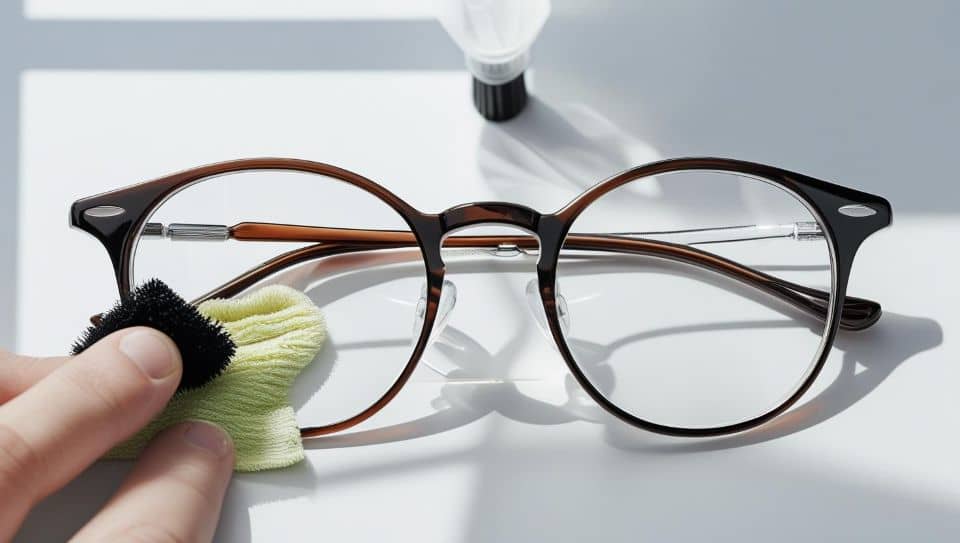
Cleaning Different Types of Glasses Lenses Without Damaging Them
Not all lenses are created equal—and neither is the way you clean them. While the basic steps for cleaning glasses apply to most eyewear, certain lens types need a little extra attention. If you’re wearing anti-reflective, polarized, or tinted sunglasses, using the wrong cleaner or technique could strip their coating or reduce their effectiveness. Here’s how to handle each lens type the right way.
How to Clean Anti-Reflective (AR) Lenses
If your glasses have an anti-reflective coating, you’re probably enjoying clearer vision and less glare—but that coating can be fragile. These lenses scratch more easily and are extra sensitive to harsh chemicals.
Stick to lukewarm water and a gentle lens cleaner made for AR lenses. Avoid ammonia, vinegar, or anything labeled “multi-surface.” Always use a soft microfiber cloth, and never use rough towels or wipes, even if they say “gentle.” Be especially careful not to over-wipe, as excess friction can cause the coating to peel over time.
Best Practices for Cleaning Polarized Lenses
Polarized sunglasses are amazing for cutting glare—especially while driving, fishing, or spending time near water. But like AR lenses, they contain a special film that can get damaged if not cleaned correctly.
Start with a rinse of cool to lukewarm water to remove grit or salt. Use a lens-safe soap or spray, and avoid rubbing too hard. Polarization is embedded within the lens, but excessive force or repeated contact with harsh chemicals can still reduce its clarity over time. Dry them gently with a microfiber cloth using light, circular motions.
If you’ve been at the beach or in high-salt environments, consider rinsing them twice to avoid salt crystal buildup.
Caring for Tinted Sunglasses
Whether you wear them for style or sun protection, tinted sunglasses often come with added coatings like UV protection or mirrored finishes. These are particularly sensitive to alcohol-based cleaners and abrasive cloths.
Use the same basic process—rinse, apply a gentle cleaner, and wipe with a clean microfiber cloth—but double-check your cleaner label to make sure it’s safe for mirrored or coated lenses. If your lenses have a gradient tint or fashion coloring, be even more cautious: harsh wiping can cause uneven fading or streaking.
Also, never leave tinted sunglasses in a hot car or on a sun-soaked dashboard. Extreme heat can warp both the frame and lens coatings.
Don’t Forget Your Frames
Different frame materials—like metal, acetate, or plastic—respond differently to cleaners too. While you’re focused on lens care, take a few seconds to gently wipe down the nose pads, hinges, and temples using a damp cloth. Avoid getting cleaning fluid deep into the hinge or screw areas, as this may cause corrosion or loosen parts over time.
Final Thoughts:
Your glasses are more than a fashion statement or vision aid—they’re something you depend on every single day. Taking the time to learn the right way to clean your glasses, from choosing a microfiber cloth to using a lens-safe cleaner, helps keep your vision crisp and your frames in great shape.
By following a gentle, consistent cleaning routine and avoiding common pitfalls like dry wiping or using harsh chemicals, you protect not only the surface of your lenses but also any special coatings that improve clarity and reduce glare. And when you’re wearing anti-reflective, polarized, or tinted lenses, a little extra attention goes a long way.
At the end of the day, good vision deserves good care. With the simple tips from this guide, you’ll be able to keep your glasses spotless and scratch-free—so you can see the world clearly, comfortably, and confidently every time you put them on.
Extended Reading
