Buy Eyeglasses at Lensalter- up to 50% OFF! SHOP NOW


Eyewear Size Guide: Find the Perfect Fit for Your Glasses or Sunglasses
Ever held up a pair of glasses and thought, “Are these going to fit my face… or make me look like a bug?” Or maybe you’ve ordered sunglasses online and found out the hard way they slide off your nose or squeeze your temples. Yup — it happens to the best of us.
That’s exactly why understanding your glasses size matters. Whether you’re shopping for prescription frames, blue light blockers, or fashion-forward sunnies, getting the size right makes all the difference in both comfort and style.
This simple yet complete eyewear size guide will walk you through everything — from how to read those tiny frame measurements to how to pick the best glasses for your face shape. Whether you’re into oversized sunglasses or sleek minimalist frames, this guide will help you confidently choose the right size without second-guessing every click.
Why Does Eyewear Size Even Matter?
Why some glasses feel great while others constantly slip down your nose or pinch behind your ears? Well, that usually comes down to one simple thing — the size of your eyewear. Getting the right glasses size isn’t just about how they look (though that’s important too); it’s about how they fit your face and function for your eyes.
If your sunglasses or prescription glasses are too wide, they might sit awkwardly, causing discomfort or even affecting your vision alignment. On the flip side, frames that are too tight can leave pressure marks or make wearing them for long hours pretty annoying. And if you’re wearing progressive lenses or have a stronger prescription, the right frame size becomes even more critical to make sure your lenses work like they’re supposed to.
Plus, let’s be honest — nobody wants to keep pushing their glasses up every five minutes or dealing with frames that don’t quite sit right. That’s why knowing how to pick the correct eyewear size can make all the difference between frames you love and frames you regret buying.
How Do You Even Read Those Eyeglass Frame Measurements?
Ever noticed those tiny numbers printed on the inside of your glasses arm and thought, “What do these even mean?” Don’t worry — you’re definitely not alone. Those numbers aren’t random; they’re your glasses’ size specs, and learning to read them is actually pretty simple once you know what you’re looking at.
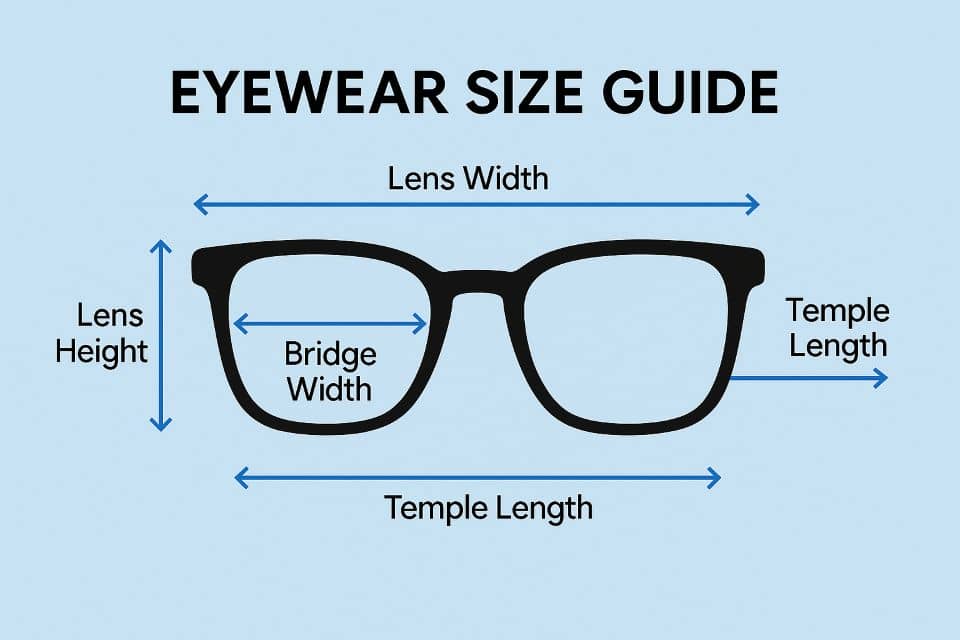
Most eyeglass frames — including sunglasses — have a sequence like 52□18 140 printed on the inner temple. Let’s break it down:
- Lens Width (52 mm): This is how wide one lens is, measured horizontally. It plays a big role in how the glasses sit on your face and how they look overall.
- Bridge Width (18 mm): This is the space between the lenses — the part that rests on your nose. Too wide? Your glasses slide down. Too narrow? Ouch, pressure marks.
- Temple Length (140 mm): This one tells you how long the arms are — the parts that go over your ears. It helps keep your frames snug without pinching.
So yeah, these three numbers are kind of a big deal. They help you compare sizes across different styles and brands, especially when shopping online. Once you get familiar with your ideal glasses measurements, choosing the right size becomes way less of a guessing game.
💡 Pro Tip: Always measure in millimeters (mm) — it’s the standard unit for eyewear sizing.

How Do I Measure My Current Glasses to Know What Size Fits Me?
So you’ve got a pair of glasses that fits just right and you’re thinking, “Can I just measure these and get the same size next time?” Absolutely — that’s actually one of the smartest ways to make sure your new frames will feel as comfortable as your old ones.
Start by flipping your glasses over and looking inside one of the arms (the temple). You’ll likely see a series of numbers like 50-18-140. That’s the exact sizing info you need — your current eyeglass measurements.
But what if the numbers are worn off or not printed at all? No worries — you can manually measure:
- Lens Width: Measure the widest horizontal part of one lens in millimeters.
- Bridge Width: Measure the space between the two lenses (that’s the bridge that sits on your nose).
- Temple Length: Measure from the hinge all the way to the tip of the arm, including the bend that hooks around your ear.
These three numbers are the blueprint of your current glasses size — and they’re incredibly helpful when you’re trying to match the fit on a new pair, whether it’s sunglasses or prescription frames.
🧠 Quick tip: Write these numbers down or snap a pic on your phone so you always have them handy when shopping online.
How Do I Know What Glasses Size Looks Best on My Face Shape?
So, how do you figure out which eyewear size and shape works best for your face?
Let’s start with identifying your face shape. Take a look in the mirror (pull your hair back if needed), and focus on the width of your forehead, cheekbones, jawline, and the overall length of your face. Once you’ve got that, use this quick guide to pick the right glasses for your face shape:
| Face Shape | What to Look For in Eyewear |
|---|---|
| Round | Go for rectangular or square frames with a narrow bridge — it adds definition and sharpens softer angles. |
| Oval | Lucky you! Most frame styles work. Just aim for balanced proportions — medium-width frames are a solid choice. |
| Square | Try round or oval glasses with thin frames to soften strong jawlines and angles. |
| Heart-Shaped | Choose frames that are wider at the bottom or feature lighter materials — they balance out a broader forehead. |
Keep in mind — it’s not just about the shape of the frame, but also about choosing the right glasses size within that shape. A bold square frame might look great, but if it’s too wide or too narrow for your face, it won’t feel right.
Finding the perfect pair means matching both frame style and frame size to your unique face shape. Once you nail that combo, your eyewear doesn’t just fit — it flatters.
What’s the Real Difference Between Oversized Glasses and Regular Fit?
maybe you’re more of a classic-fit kind of person and wondering if there’s a functional reason to go bigger. Either way, knowing the difference between oversized vs. regular glasses fit can help you choose eyewear that’s not just stylish — but also comfortable.
So let’s break it down:
Oversized Glasses
These are the frames with extra-wide lenses — usually 55mm and up in lens width. They’re often seen in fashion-forward looks and celebrity styles. But it’s not just about the look. Oversized glasses can also give you more lens coverage, which is great for blocking sunlight in oversized sunglasses or adding drama to your everyday specs.
They’re perfect if:
- You love bold, statement-making frames
- You have a larger or round face shape and want balance
- You’re going for that retro or glam aesthetic
But heads up — if your face is on the smaller side, oversized frames can overwhelm your features and slide off more easily unless they’re fitted just right.
Regular Fit Eyewear
Most standard glasses and sunglasses fall into the 48mm–54mm lens width range. These are the go-to sizes for most face shapes and offer a more balanced, everyday look. You’ll find plenty of style options — from minimal metal frames to sleek wayfarers — all within this regular fit category.
They’re ideal if:
- You prefer a more subtle or classic look
- Your face is smaller or more narrow
- You want something easy to pair with anything
So Which One Should You Choose?
It really comes down to your personal style, face shape, and how bold you want your eyewear to be. If you’re not sure, start with regular fit glasses — they’re safe, versatile, and work for most people. Want to stand out or protect more of your eyes from the sun? Try an oversized sunglasses frame and see how it feels.

How Do I Know If I Need a Small, Medium, or Large Frame Size?
Have you ever bought glasses online and thought,, “Wait… am I a small or medium? Or maybe large?” You’re definitely not alone. These labels — small, medium, large — sound simple, but when it comes to eyeglass sizes, they can be a little confusing if you’re not sure how they’re measured.
So here’s a plain and simple breakdown to help you figure out where you land:
What Do Small, Medium, and Large Frame Sizes Actually Mean?
The size categories usually refer to the lens width, sometimes combined with the bridge width and temple length. Let’s look at the typical range:
| Frame Size | Lens Width (mm) | Bridge Width (mm) | Temple Length (mm) |
|---|---|---|---|
| Small | 48 – 50 | 16 – 18 | 135 – 140 |
| Medium | 51 – 54 | 18 – 20 | 140 – 145 |
| Large | 55 – 58 | 20 – 22 | 145 – 150 |
But remember, these numbers are guidelines — not strict rules. Some people with smaller faces wear wider frames for style, and vice versa. It all comes down to comfort and how you want your glasses to look.
So… How Do You Know What Frame Size You Are?
Here are a few quick tips:
- Already have a pair of glasses that fit great? Check the numbers printed inside the arm. That’s your starting point.
- Glasses constantly slide down your nose? You might be wearing a frame that’s too wide.
- Feeling pressure at the sides of your head? That’s usually a sign the frame is too small.
If you’re completely new to this, medium frame glasses are the safest bet — they tend to fit most people comfortably and work with a variety of face shapes.
How Do You Buy Glasses Online Without Trying Them On First?
Let’s be honest — shopping for glasses online can feel a little tricky. The good news is: you’re not flying blind. With a few smart tips, you can confidently buy glasses online and end up with a pair you’ll actually love to wear.
Here’s how to make sure your online eyewear shopping goes smoothly:
1. Know Your Current Frame Measurements
This one’s key. If you already have a pair of glasses that fit you well, use them as your measuring stick. Look inside the temple arm for numbers like 50-18-140 — that’s your current frame size. Match those numbers as closely as possible when shopping online.
2. Use Virtual Try-On Tools (If Available)
More and more eyewear websites now offer virtual try-on for glasses using your phone or webcam. It’s not perfect, but it gives you a pretty good idea of how the frames will look on your face shape. Definitely worth using before you click “add to cart.”
3. Read the Product Descriptions Carefully
Don’t just go by how the glasses look in the photos. Look for details like lens width, bridge width, and temple length in the product specs. Some sites even suggest what face shapes or head sizes a frame suits best — super helpful if you’re unsure.
4. Check the Return Policy Before You Buy
Even with the best guesswork, sometimes the fit isn’t quite right. Make sure the store offers free returns or exchanges just in case your first choice doesn’t work out. It makes a big difference in peace of mind when buying eyewear online.
5. Stick With Trusted Brands or Stores You Know
When in doubt, go with reputable eyewear brands that offer clear sizing info, real customer reviews, and strong customer support. A good online glasses store wants you to get a great fit the first time.
Ready to Find Glasses That Actually Fit?
At the end of the day, finding the right glasses size doesn’t have to be complicated. Once you understand your current frame measurements, your face shape, and the basics of how eyewear sizing works, buying glasses online becomes way less stressful — and a lot more fun.
Whether you’re browsing for everyday prescription frames, hunting for that perfect pair of oversized sunglasses, or just want glasses that won’t keep sliding off your nose, the right size is the secret ingredient to feeling confident and comfortable in your eyewear.
So next time you’re shopping, don’t just go by looks. Check the numbers. Think about how they’ll feel. And most importantly — trust that when your glasses fit well, everything else just clicks into place.
Extended Reading